Sale Ending This Week

Clare Hensford
Finally Sleep Through The Night Without Pills Or Perfect Discipline (And Wake Up Human Again)
The busy professional's 4-week system that fixes chronic insomnia using proven
CBT-I techniques you can do between meetings
oUR READERS' SUCCESS STORIES

I'm still in shock...
"honestly i was skeptical. like another insomnia guide that tells me to drink tea lol. but i tried the sleep window thing and the 20-minute rule and by day 4 i was falling asleep in 15 minutes. i haven't slept this well since before my promotion. still kind of shocked it actually worked"
Alex M., Product Manager


This one thing changed everything for me...
"I've had insomnia for 7 years. tried pills, tried therapy, tried spending cash on a new mattress. this guide was so cheap and it did more for me in 2 weeks than everything else combined. the part about getting OUT of bed when you're awake frustrated changed everything. now i actually sleep when i'm in bed instead of lying there catastrophising about tomorrow"
Priya S., Management Consultant

This made my wife very happy!
"Three things I changed: moved my last coffee to 1pm, started waking at 6:30 every day including weekends, and used the wind-down steps. Within 10 days my 3am wake-ups went from 5 nights a week to maybe once. My wife says I'm way less cranky lol. This is the first thing that actually stuck."
Marco T., Operations Director

My little kit changed my work travel life!
"I travel twice a month and hotels were destroying my sleep. The 5-minute hotel setup routine and the jet lag section are gold. I bring my little kit now - eye mask, earplugs, binder clips for curtains. I'm sleeping better in random Marriotts than I used to sleep at home. Makes work travel way less awful."
Dana K., Sales Lead
30-Day Money Back Guarantee
I Know Exactly What It's Like...
From the desk of Clare Hensford
It's 2:47 a.m.
You're staring at the ceiling again. That presentation is in five hours. You felt exhausted at 9 p.m, but the second your head hit the pillow, your brain turned into a to-do list generator.
You've tried everything...
The chamomile tea.
The expensive mattress.
The meditation app that just made you more aware of how awake you are.

You check your phone. Bad idea. Now you're thinking about that email. And calculating how many hours you could still get if you fell asleep right now. Which makes falling asleep even less likely.
Your body is screaming for rest. Your mind is running a 24-hour news channel. And tomorrow, you'll drag through meetings, reach for your third coffee by noon, and promise yourself you'll "try harder" to sleep better tonight.
But here's what nobody tells you about chronic insomnia...

You're not broken. Your body didn't forget how to sleep. You're stuck in a pattern where your brain learned that bed equals thinking time instead of sleep time.
Your internal clock is confused by weekend sleep-ins and late-night emails. Your sleep drive is getting drained by afternoon caffeine and evening couch naps you don't even remember taking.
I Did All Of The Work For You,
So You Don't Have To...
This guide uses CBT-I. Cognitive Behavioral Therapy for Insomnia. It's the gold-standard treatment that sleep clinics charge £1,500-£3,000 for...
Multiple studies show it works better than sleeping pills for long-term results, and the improvements last because you're actually fixing the patterns, not covering them up.
But here's the problem with clinical CBT-I. It requires weekly appointments. Homework. Sleep logs that take 15 minutes to fill out.
Most busy professionals bail after week two because who has time for that.
So I stripped it down to what actually works and made it fit inside a packed schedule. The same three core tools that clinics use.
The same proven techniques. But rebuilt for people who have back-to-back meetings, travel twice a month, and can't dedicate an hour a day to sleep therapy.
And This works even if:
You've had insomnia for years.
Even if you travel
Even if your schedule changes daily
What you're about to learn is how to retrain your brain to sleep in 60-second check-ins you do between meetings.
No weekly therapy. No rigid schedules. Just clear steps that fit into the life you already have.
30-Day Money Back Guarantee
You've probably already tried these "solutions." Let me guess why they didn't work...
Think about it...
Have you tried any of these solutions that the so-called sleep experts recommend?
"Just relax and the sleep will come"
You spend 90 minutes doing progressive muscle relaxation and breathing exercises (but now you're so focused on relaxing that you're creating performance anxiety about sleep itself, which keeps you wide awake analyzing whether your shoulders are actually loose enough)
"Buy a better mattress"
You dropped £2,000 on memory foam and fancy pillows (but you're still awake at 3 a.m. because the real problem is your brain thinks the bed is for problem-solving, not sleeping, and no amount of comfort fixes that association)
"Sleep hygiene tips"
You bought blackout curtains, a white noise machine, and lavender everything (but you still can't fall asleep because you're drinking coffee at 4 p.m. and checking work email at 10:30 p.m, which are the actual culprits sabotaging your sleep drive)
"Just go to bed earlier"
You climb into bed at 9 p.m. to "catch up" (but now you lie there for two hours frustrated and awake, teaching your brain that bed equals tossing and turning, which makes the problem ten times worse)
"Take a sleeping pill"
It knocks you out for a few nights (but you wake up groggy, the benefits fade fast, and you never learned the actual skills to fall asleep naturally, so you're dependent and still not sleeping well)
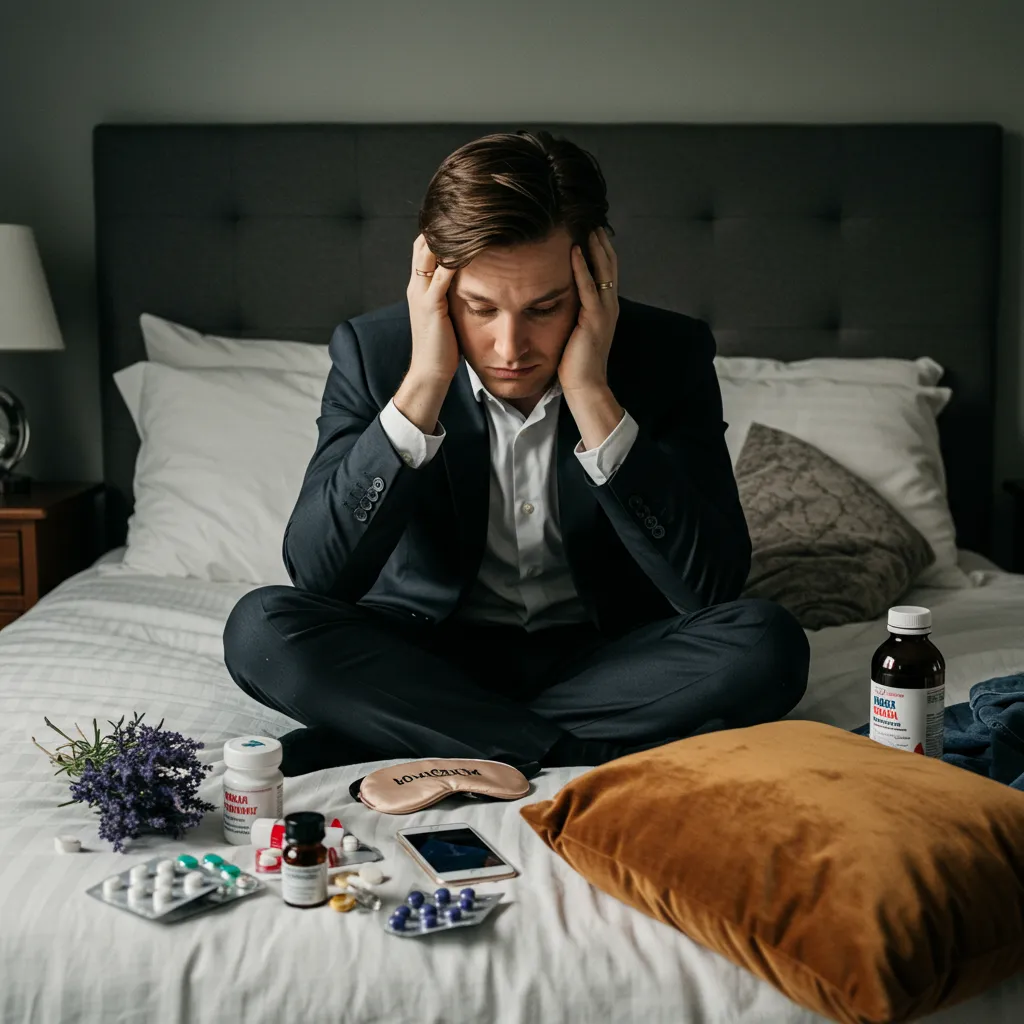
Here's why all of that failed. You were treating symptoms instead of retraining the two systems that control your sleep. Your circadian rhythm and your sleep drive. When those get out of sync, no amount of relaxation or fancy bedding will fix it.
Imagine this...
It's 10:45 p.m. You've wrapped up your evening—wrote down tomorrow's top three tasks, dimmed the lights, did five minutes of easy breathing. You get into bed and your eyes feel heavy.
Not wired.
Not buzzing with work thoughts.
Just... tired in the right way.
You're asleep in 15 minutes.
You wake once around 3 a.m. to use the bathroom, but you're back asleep in under 10 minutes.
No racing thoughts.
No checking your phone.
No lying there calculating how many hours you have left.
Your alarm goes off at 6:30 a.m. and you actually feel like a person.
Not great.
Not perfect.
But rested enough that you don't need to bargain with yourself about getting up.
You have your coffee.
You step outside for 12 minutes of light and a quick walk.
Your brain wakes up naturally instead of relying on triple espressos to fake it.
No more 2 a.m. doom spirals. No more lying awake catastrophizing about tomorrow's presentation while your heart pounds and your mind replays every awkward thing you've ever said.
No more dragging through meetings half-asleep. No more nodding off during the 2 p.m. video call, reaching for your fourth coffee, and wondering how everyone else functions like normal humans.
No more weekend sleep-ins that wreck Sunday night. No more that sick feeling when you realize it's 11 p.m. Sunday and you're wide awake with work tomorrow morning.
No more fighting with your brain at bedtime. No more getting into bed and immediately feeling alert like someone flipped a switch, then spending the next hour scrolling and getting more frustrated.
"I've had insomnia for years. What if this doesn't work for me?"
The techniques in this guide are based on CBT-I, which has decades of research showing it works for 70-80% of people with chronic insomnia.
It works even if you've had sleep problems for years because you're retraining patterns, not just masking symptoms. If sleep clinics charge £1,500-£3,000 for these same tools, there's a reason. They work.
"I don't have time for a complicated sleep program."
That's exactly why this guide exists. Each daily check-in takes 60 seconds. The wind-down is 30 minutes.
The morning light is 10-20 minutes you stack onto something you're already doing. You're not adding hours of therapy or meditation. You're making tiny timing adjustments that fit between meetings.
"What if my schedule is too chaotic?"
The system is built for real life. Travel. Late dinners. Emergency deadlines. The guide includes a stripped-down "crunch week protocol" and a 72-hour reset for when things go sideways.
You keep two anchors no matter what—fixed wake time and morning light. Everything else flexes around your reality.

"I've tried CBT-I before and it was too rigid."
Clinical CBT-I requires weekly appointments and detailed logs. This guide gives you the three core tools that do 80% of the work—stimulus control, fixed wake time, and a realistic sleep window—without the 15-minute homework or therapy sessions. It's designed for compliance, not perfection.
"What if I need medication to sleep?"
The guide isn't anti-medication. It includes a section on when to seek medical help and how to talk to your doctor. Some people use short-term meds while building behavioral skills.
This guide makes those skills stick so you're not dependent long-term. Many users find they need less medication or none at all after a few weeks of applying these tools.
Introducing...
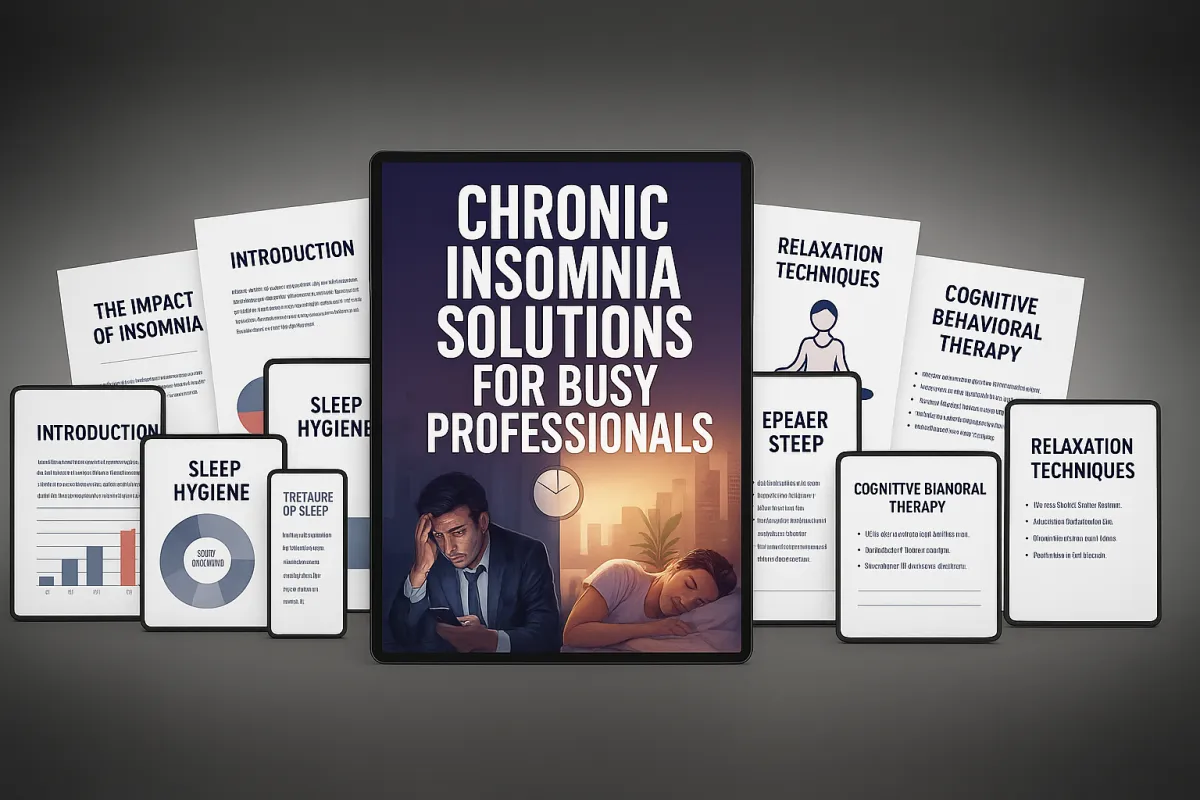
Chronic Insomnia Solutions For Busy Professionals
A complete 4-week system that retrains your brain to sleep using proven CBT-I techniques you can do in 60-second check-ins between meetings.
Inside this 72-page guide, you'll get the exact step-by-step process that fixes the two sleep engines controlling your nights, your circadian rhythm and your sleep drive.
No guessing. No generic tips. Just clear moves that work even if you travel, work late, or have a schedule that changes daily.
30-Day Money Back Guarantee
Here's Everything You Get Today...
Special Offer 🔥
Chronic Insomnia Solutions For Busy Professionals
Chapter 1: Insomnia 101—Why You Can't Sleep (And What's Actually Going On) (Pages 3-17)
The two sleep engines that run your nights and exactly how busy-life habits mess them up. You'll learn why late emails make your brain think it's still daytime, how a 4 p.m. latte costs you hours of sleep at midnight, and why weekend sleep-ins create jet lag every single Monday. Includes a quick self-check framework and first moves you can try tonight.
Chapter 2: Find Your Sleep Saboteurs.
A 7-Day Audit You Can Do Between Meetings (Pages 18-28)
The 60-second morning and evening check-ins that show you exactly which habits are wrecking your nights. You'll calculate your sleep efficiency with real numbers, spot the 2-3 saboteurs causing most of your problems, and get decision rules that tell you what to fix first. Includes copy-paste templates and three real professional case studies.
Chapter 3: The CBT-I Starter Pack
Three Proven Tools That Rebuild Sleep Fast (Pages 29-40)
The three core techniques that retrain your brain to sleep: stimulus control (the 20-minute rule that breaks the bed-worry link), fixed wake time (your strongest clock anchor), and your sleep window (how to build sleep drive on purpose). Includes the 14-day plan with weekly adjustment rules, worry loop defusers you can use at 2 a.m, and real timelines from two professionals who went from 79% to 88% efficiency in two weeks.
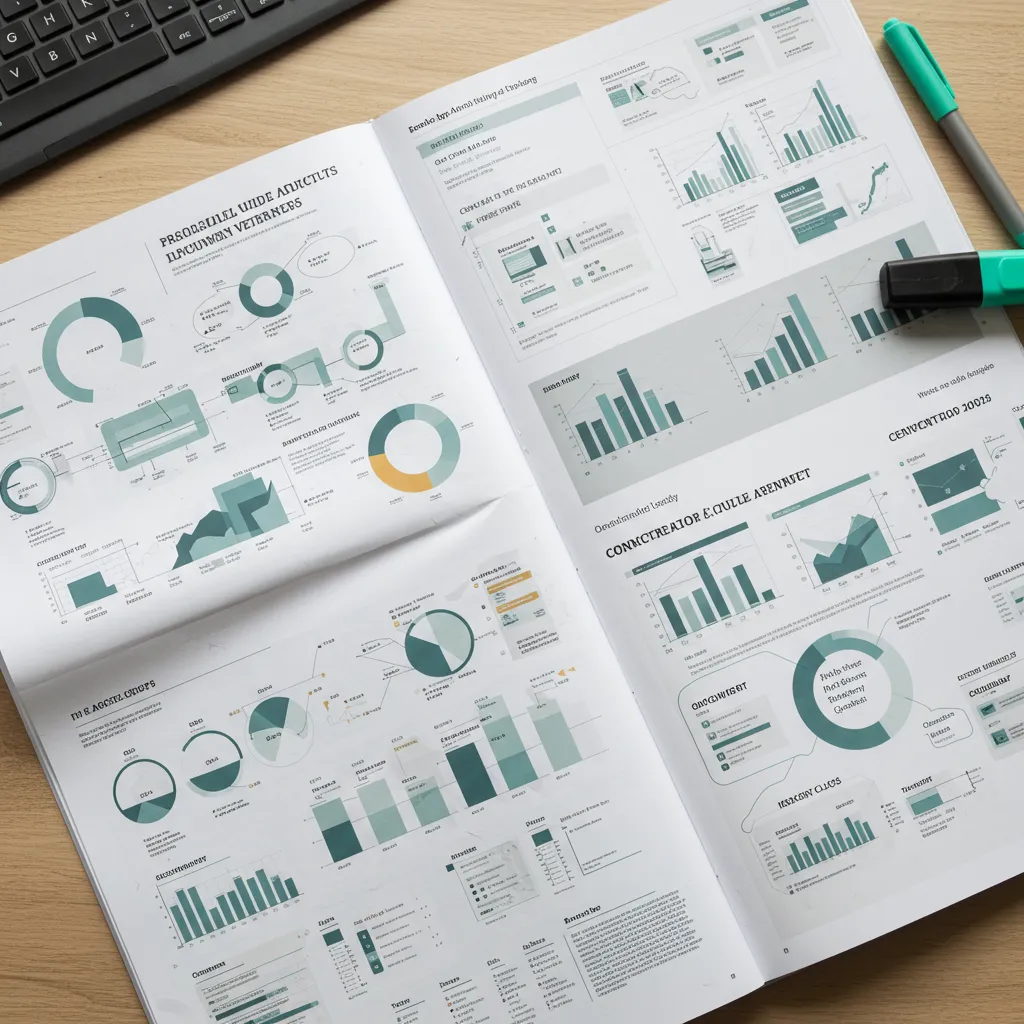
Chapter 4: Busy-Day Routines That Make Nights Easier
Light, Caffeine, Movement, Wind-Down (Pages 41-51)
How to use morning light, caffeine timing, 60-second movement resets, and a 3-step wind-down that takes 30 minutes. You'll get the 10-3-2-1-0 framework simplified for real schedules, two full-day examples you can copy, and the exact times to stop caffeine and finish dinner so they don't sabotage your night eight hours later
Chapter 5: Upgrade Your Sleep Environment (And Tech)
Bedroom, Gadgets, Travel Hacks (Pages 52-63)
The golden trio of cool, dark, and quiet, plus which tech helps and which creates anxiety. You'll get a 90-minute bedroom makeover checklist, a five-minute hotel room setup routine, jet lag strategies for eastbound and westbound trips, and melatonin basics with real dosing that works.
Chapter 6: Your 4-Week Plan And Troubleshooting
Track Progress, Adjust, Know When To Get Help (Pages 64-72)
Week-by-week targets, a tiny dashboard that takes 60 seconds to update, and how to adjust your sleep window by 15 minutes based on efficiency. Includes quick fixes for common roadblocks, red flags that need a doctor, how to talk to your clinician without awkwardness, the crunch-week protocol when deadlines hit, and a 72-hour reset when you slide.
£197.00 just £10 now - OFFER EXPIRES IN
Here's What's Wild
A single CBT-I session with a sleep therapist costs £150-£300. A full program is 6-8 sessions. That's £1,500 to £3,000 before insurance.
A new mattress that doesn't fix the actual problem? £2,000.
One month of sleeping pills? £80-£200 depending on your insurance, plus you're still dependent and not actually solving anything.
This guide gives you the same three core CBT-I tools that clinics charge thousands for, but rebuilt so you can do it in 60-second check-ins between meetings.
The regular price is £197. Which is still less than half of one therapy session.
But right now, you're getting it for only £10.
Just £197 £10.00
30-Day Money Back Guarantee
You Have Two Choices Right Now...
1. Close this page
Keep doing what you've been doing. Lie awake at 2 a.m. trying to force your brain to shut up. Drag through tomorrow's meetings. Promise yourself you'll figure it out eventually. Maybe try another meditation app or buy more lavender. Watch this pattern eat another month of your life.
2. Spend £10 On 72 pages learning the actual system that retrains your brain to sleep
Do the 7-day audit. Set your sleep window. Use the 20-minute rule. Get your morning light. In two weeks, you're falling asleep in under 20 minutes and waking up feeling like a human again.
The techniques in this guide aren't new. Sleep clinics have used them for decades with success rates of 70-80%.
You're just getting them without the £1,500 price tag, the weekly appointments, and the rigid homework that doesn't fit a busy schedule.
For the price of one lunch at Nandos, you can fix the one thing that affects every single hour of your day.
You're exhausted. You're frustrated. You've tried everything else. But you haven't tried this yet.
Click the button. Download the guide. Run the 7-day audit this week. If it doesn't work, you get your £10 back. No questions asked.
The only question is whether you want to keep suffering through 2 a.m. ceiling stares or if you're finally ready to sleep like a normal person again.
P.S. — The 20-minute rule alone changed everything for hundreds of people. When you get out of bed at 2 a.m. instead of lying there frustrated, you break the association between bed and anxiety.
Your brain relearns that bed equals sleep. That one tool is worth way more than £10, and it's just one chapter in the guide.
P.P.S. — Your insomnia isn't a character flaw. It's not a willpower problem. It's two sleep engines that got out of sync because of habits that made sense at the time.
This guide shows you exactly how to sync them back up in four weeks, even with a packed schedule and daily chaos. The system is forgiving, flexible, and built for real life. Get it now for £10 while this price lasts.
30-Day Money Back Guarantee